Haiti: Racial Equality Architecture
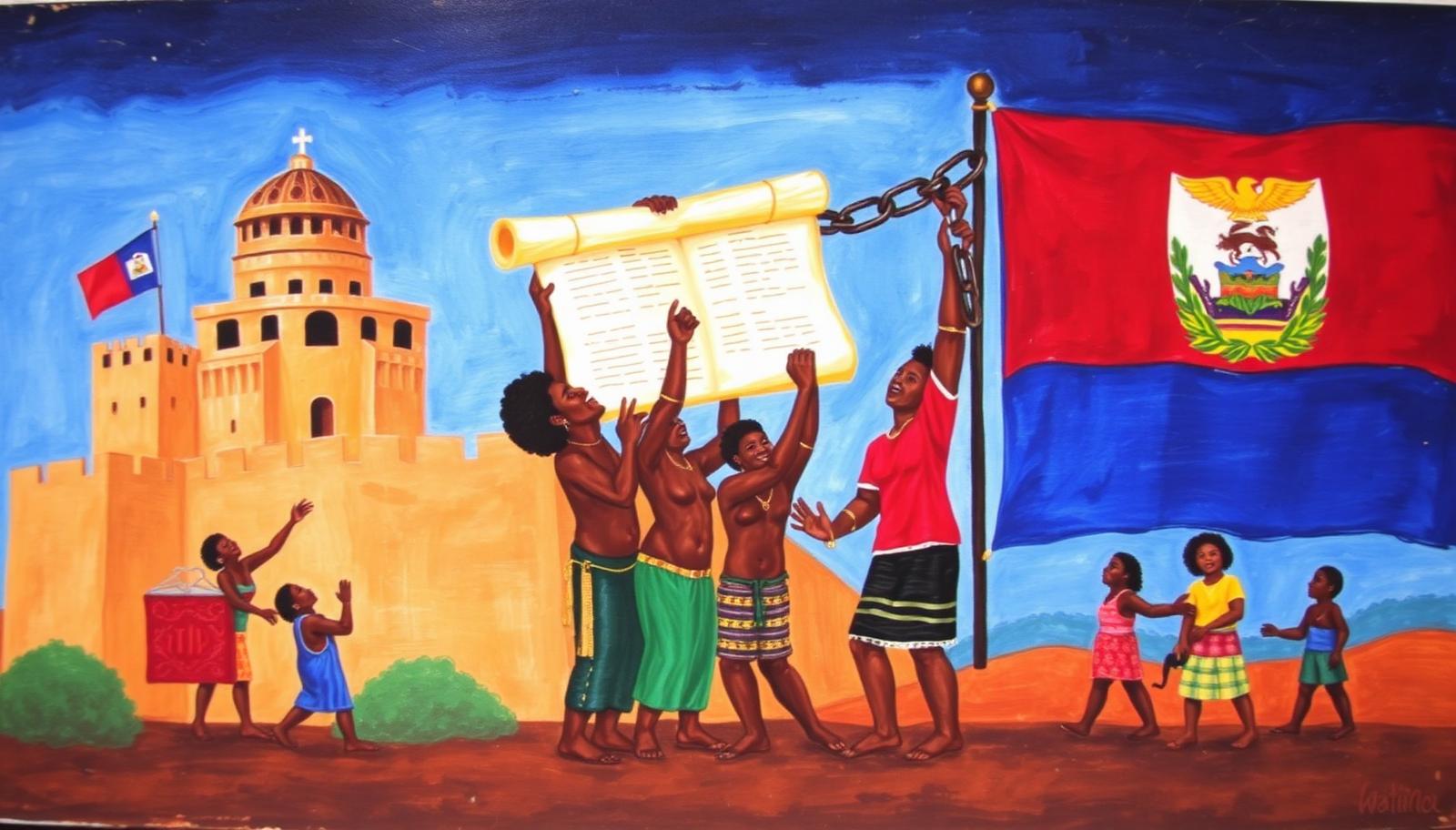
Haiti did not merely win a war. It designed, wrote down, and defended the first state architecture in the modern world built on the equality of all people regardless of race.
How Haiti built racial equality into a state
A blueprint, not an accident
The Haitian Revolution produced more than independence: it produced institutions. In law, in constitution, in diplomacy, and in refuge, Haiti built the load-bearing structures of racial equality decades before the rest of the Atlantic world would accept the idea. These are the pillars of that architecture.
Universal, immediate abolition
Haiti abolished slavery outright and permanently at its founding — no gradual emancipation, no apprenticeship, no compensation to enslavers. It was the first nation in the world to do so, and the ban was written into the state's founding law rather than left to legislatures.
Constitutional equality, 1805
The 1805 Constitution declared all citizens equal before the law and abolished distinctions of color, stating that Haitians would be known generically as Black — deliberately converting a category of oppression into one of common citizenship.
Citizenship as refuge
Haiti offered citizenship and freedom to any person of African or Indigenous descent who set foot on its soil. It was the first modern state to make asylum from racial bondage a constitutional right.
Land and dignity
Rather than restore plantation ownership, Haitian leaders — notably Alexandre Pétion — redistributed land to formerly enslaved soldiers and farmers, tying equality to material independence, not just legal status.
Anti-colonial diplomacy
Haiti armed and sheltered Simón Bolívar on the explicit condition that he abolish slavery in the territories he liberated — exporting emancipation as foreign policy at a moment when no great power would.
Sovereignty defended in stone
The Citadelle Laferrière and a standing citizen army existed for one purpose: to make the reimposition of slavery militarily impossible. Equality was not only declared, it was garrisoned.
The architecture in dates
- 1791
Bois Caïman
The uprising begins as a coordinated political act, not a riot — organized across plantations with shared aims.
- 1801
Louverture's Constitution
Toussaint Louverture's constitution bans slavery forever in Saint-Domingue and declares all people born there free and equal citizens.
- 1804
Independence
Haiti declares independence — the first state created by formerly enslaved people, and the first to be founded on the illegitimacy of racial slavery.
- 1805
Equality codified
The Imperial Constitution abolishes color distinctions and guarantees equality before the law for all citizens.
- 1816
Freedom exported
Pétion supports Bolívar's liberation campaign, conditioned on the abolition of slavery in liberated South America.
- 1825 →
The price of the precedent
France extracts a 150-million-franc indemnity for recognition — the world charging Haiti for the equality it built.
The world inherited this design
Abolition movements, Latin American independence, Pan-Africanism, and modern human-rights language all draw on precedents Haiti set first and paid for dearly. Teaching Haiti as an architect — not a casualty — is the point of this site.
- The first constitutional ban on slavery in the Americas.
- The first state to guarantee freedom to any person fleeing racial bondage.
- The first foreign policy to make abolition a condition of alliance.
- The first nation to define citizenship without racial hierarchy.