The culture of Haiti
A living culture of color, rhythm, and resilience — where art, music, religion, cuisine, and language intertwine.
Visual art
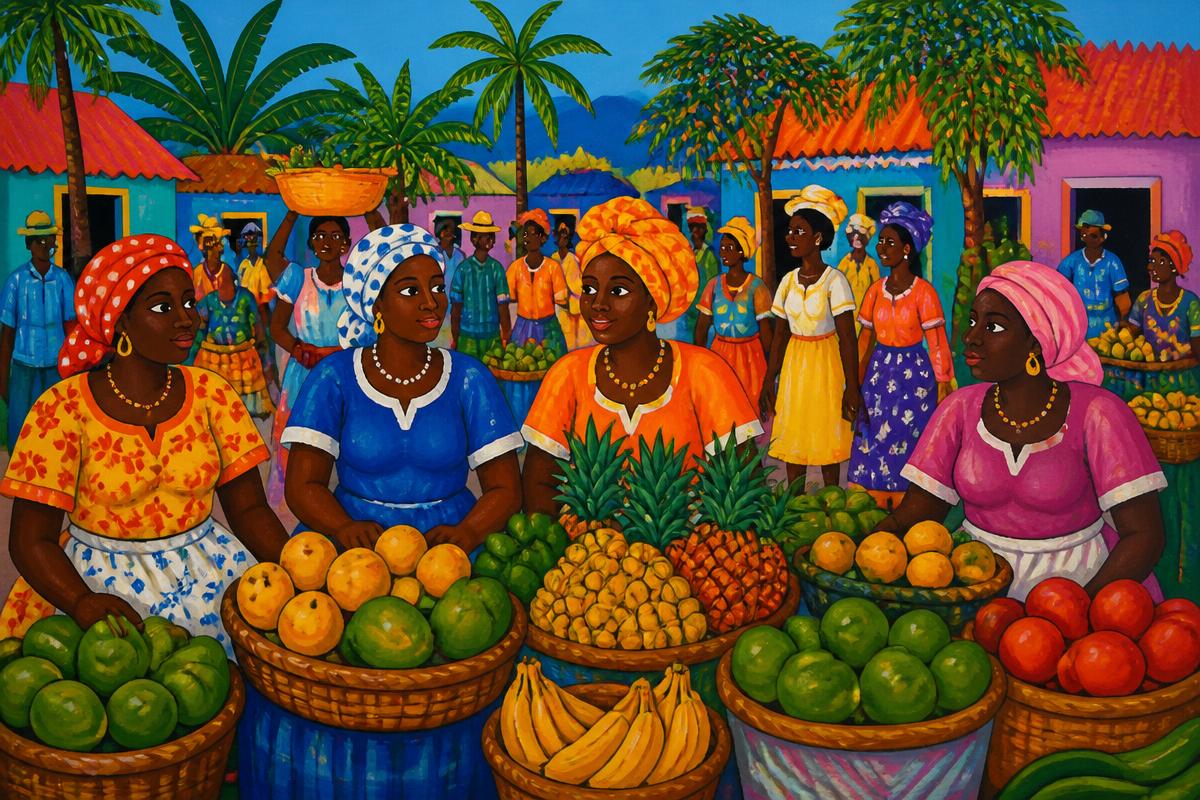
Haitian naïve art bursts with color and spiritual life. Painters like Hector Hyppolite and Philomé Obin depict daily life, myth, and Vodou in vivid flattened scenes. Alongside canvas, the sequined Vodou flags (drapo Vodou) are a dazzling textile tradition — thousands of beads and sequins stitched into sacred emblems.
Music & dance
Kompa (compas direct) is Haiti's signature modern dance rhythm, pioneered by Nemours Jean-Baptiste. Rara is the rhythmic street music of Lent and Easter — horns, drums, and bamboo horns (vaksen) parading through the countryside. Meringue and twoubadou round out a sound inseparable from movement.
Vodou
Vodou is a recognized, ancestral religion blending West African traditions with Catholicism. It honors a supreme creator (Bondye) and spirits called lwa — such as Legba, Ogou, and Ezili — who serve as intermediaries. Far from a caricature, Vodou is a pillar of Haitian identity, art, music, and community.
Cuisine
Haitian food is a Creole fusion of African, French, Taíno, and Arab influences. Griot (crispy fried pork), diri ak pwa (rice and beans), tasso, legim, and pikliz (spicy pickled cabbage) are staples. Soup joumou — pumpkin squash soup — is served every New Year's Day to celebrate independence from a drink once forbidden to the enslaved.
Language
Haiti speaks two languages. Haitian Creole (Kreyòl ayisyen), born of French and West African languages, is the mother tongue of the people and an official language since 1987. French remains the language of formal institutions. Kreyòl's grammar and vocabulary are a living record of the nation's history.
Where creativity lives
Saint-Soleil movement
A celebrated school of self-taught painters from the 1970s, known for intricate, spiritual compositions linked to Vodou.
Steel drum art
Artisans hammer discarded oil drums into intricate metal sculptures of trees, spirits, and animals — a uniquely Haitian craft.
Painted tap-taps
Haiti's brightly decorated shared taxis (tap-taps) are rolling works of folk art, covered in names, saints, and scenes.